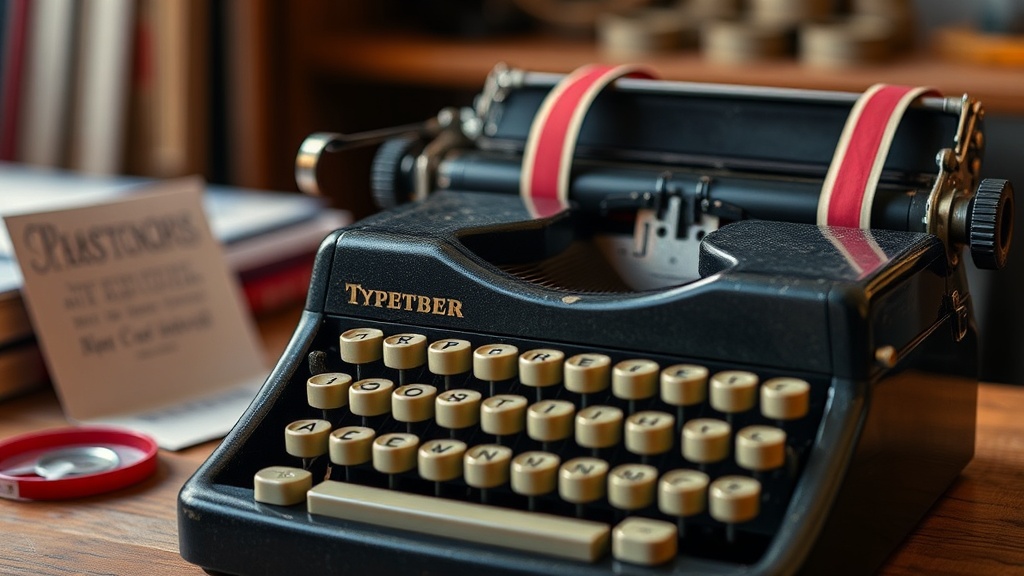
Keeping Your Typewriter Ribbons in Top Form: A Collector's Guide

Does Your Typewriter Ribbon Seem to Dry Out Too Quickly?
You’ve just swapped in a fresh ribbon, eager to compose—maybe a letter to a friend, or perhaps a new chapter for that novel. But after only a few weeks, sometimes even less, the impression begins to fade, looking weak and tired. It’s a common frustration among typewriter enthusiasts, one that can diminish the joy of typing and cost you more than it should in replacement ribbons. This guide addresses the practicalities of ribbon care and storage, offering clear, actionable advice to help you get the most life out of your typewriter ribbons, whether they’re new stock or venerable vintage finds.
Why Do Typewriter Ribbons Degrade, Anyway?
Understanding why ribbons fail helps us combat the problem. Typewriter ribbons, at their heart, are fabric strips saturated with ink. This ink isn’t just dye; it’s a complex formulation designed to transfer cleanly and last on paper. Several factors conspire against the longevity of this ink and the ribbon material itself.
First, exposure to air is a primary culprit. The solvents in typewriter ink, much like those in a paint can left open, evaporate over time. This drying process makes the ink less fluid, resulting in lighter, less distinct character impressions. Air also introduces dust and other particulate matter, which can cling to the ribbon and eventually affect the print quality or even interfere with your typewriter’s mechanism.
Next, consider light exposure. Ultraviolet (UV) light, even indirect sunlight, can break down the chemical bonds in the ink pigments. This chemical degradation leads to fading, changing the vibrancy and permanence of the ink. Think of an old photograph left in a sunny window—the same principle applies to your ribbon’s ink.
Then there’s temperature and humidity. Extreme heat can accelerate solvent evaporation, while high humidity might cause the ink to bleed or become sticky, potentially clumping up the fabric or gumming up your type slugs. Conversely, excessively dry conditions can make the ribbon brittle, increasing the chance of fraying or snapping.
Finally, the ribbon material itself plays a role. Older ribbons, particularly those made of cotton, are more susceptible to deterioration from environmental factors. Modern nylon ribbons offer greater durability but are still not immune to the effects of poor storage or prolonged exposure.
What's the Best Way to Store Unused Ribbons?
Proper storage is perhaps the single most impactful action you can take to extend the life of your typewriter ribbons. It’s a simple practice that can save you both money and the annoyance of a prematurely dry ribbon.
The key principle is to create a stable, protected environment. This means minimizing exposure to the elements we just discussed: air, light, and fluctuating temperatures and humidity.
For new, unopened ribbons—especially new old stock (NOS) or modern replacements still in their original packaging—you’re already off to a good start. The factory packaging often provides a good initial barrier. However, you can enhance this protection significantly.
- Airtight Containers: The best investment for ribbon storage is a supply of small, airtight containers. Glass jars with rubber seals (like canning jars) or sturdy plastic containers with locking lids work exceptionally well. Place each ribbon, ideally still in its original wrapper, into its own container. This creates a micro-environment that dramatically slows evaporation and keeps dust at bay.
- Darkness: Store these sealed containers in a dark place. A drawer, a cabinet, or an opaque storage box will shield them from UV light, preserving the ink’s color and chemical integrity. Avoid storing them near windows or under direct artificial light.
- Cool, Stable Temperatures: A cool, consistent temperature is ideal. Basements (if dry and not prone to flooding), interior closets, or dedicated storage units often fit the bill. Avoid attics, garages, or areas near heating vents or radiators, where temperatures can swing wildly.
- Moderate Humidity: Aim for a moderate humidity level—around 40-50% relative humidity is generally safe for most collectibles, including ribbons. In very humid climates, a desiccant packet inside your airtight container (away from direct contact with the ribbon) can be beneficial. In very dry climates, ensuring the container is truly airtight is even more critical.
What about ribbons currently installed in a typewriter? While you can’t store these in an airtight jar, you can still take precautions. Always cover your typewriter when not in use. A dust cover—whether a custom-fitted one or even a simple piece of cloth—will protect the exposed ribbon from dust and some light, reducing the rate of drying. If you know you won’t be using a typewriter for an extended period (say, several months), it’s wise to remove the ribbon, place it into an airtight container, and store it as described above. Just remember to wind it off the spools gently!
For more general information on the preservation of historical artifacts, which often includes considerations for various materials like ink and fabric, you might consult resources from institutions like the Library of Congress, which offers guidance on collection care. Another helpful resource for understanding material science in preservation is often found through academic institutions or conservation associations.
Can You Revive a Dry or Faded Ribbon?
This is where the collective wisdom of the typewriter community truly shines, often accompanied by a healthy dose of experimentation. While a truly dried-out or faded ribbon can’t always be brought back to its former glory, there are methods enthusiasts employ to try and extend their life, especially for those hard-to-find or sentimental ribbons. It’s important to approach these methods with realistic expectations and a good deal of caution—some can be messy, and none are guaranteed.
- Re-inking with Commercial Products: Specialized re-inking solutions for typewriter ribbons exist. These are typically oil-based inks designed to penetrate the ribbon fabric and replenish the dried solvents and pigments. The process involves slowly applying the re-inker to the ribbon as it’s wound from one spool to another, ensuring even saturation without oversaturating. This requires patience and often a dedicated setup to avoid staining your hands and workspace. Ensure the product is specifically formulated for typewriter ribbons; generic inks or stamp pad inks might not have the correct consistency or chemical composition, potentially damaging the ribbon or your machine.
- Mineral Oil (with extreme caution): Some collectors have reported success using a *tiny* amount of light mineral oil (like baby oil, but unscented) to recondition dry ribbons. This method is highly controversial and carries significant risks. Mineral oil is a lubricant, not an ink, and if too much is applied, it can make the ribbon greasy, attracting dust, gumming up the type slugs, and creating a mess inside your typewriter. It might also spread onto your paper, creating oily stains. If you decide to attempt this, apply an almost imperceptible amount with a fine brush or eyedropper to a small, isolated section of the ribbon first, then allow it to wick through slowly. Test it thoroughly on scrap paper before using it on anything important. This is a last-resort effort for a ribbon you might otherwise discard.
- Humidity (indirectly): For ribbons that are only slightly dry, sometimes a controlled exposure to humidity can help. Placing a ribbon (still in its original packaging or a breathable container) in an enclosed space with a very slightly damp cloth (not touching the ribbon directly, perhaps in a separate dish) for a day or two can sometimes reintroduce a tiny bit of moisture to the ink. Again, extreme caution is needed to avoid mold growth or oversaturation.
Before you even think about reviving a ribbon, always conduct a simple test: type a few lines on a piece of scrap paper. If the impression is still reasonably dark and consistent, your ribbon might just need better storage. If it’s very faint, uneven, or produces a lot of “skips,” then revival attempts might be worth the effort—or perhaps it’s simply time for a fresh ribbon. Many online communities and forums, such as those found on Typewriter Talk forums, provide extensive discussions and shared experiences regarding ribbon care and re-inking techniques. While you’re thinking about the specifics of ink, it can be useful to look at general historical practices in printing and writing. For example, the British Library frequently publishes articles and exhibits on the history of writing instruments and their materials, which sometimes includes the science behind inks.
Ultimately, the best defense against dry or faded ribbons is proactive care and intelligent storage. Treat your ribbons well, and they’ll reward you with many more pages of crisp, satisfying type.