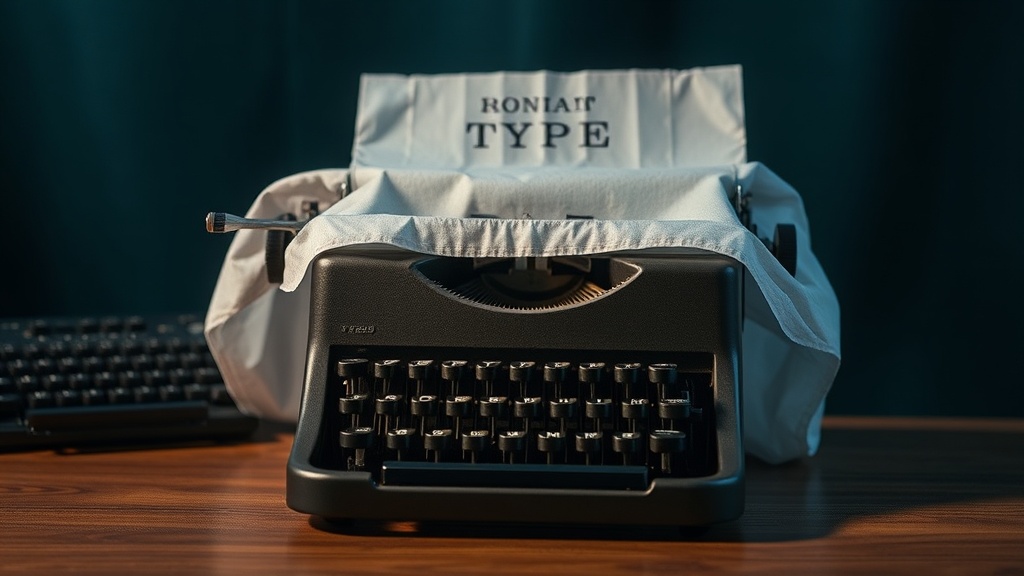
Keeping Your Typewriter Under a Protective Dust Cover

Quick Tip
Always use a breathable fabric cover rather than plastic to prevent moisture buildup.
You finish a long writing session on your Smith-Corona Silentette, slide the carriage back, and leave it sitting on your desk. An hour later, a thin layer of grey grit has already settled between the typebars. Dust isn't just an eyesore; it's a mechanical threat that settles into the delicate linkages and creates friction. Using a protective cover keeps your machine functional and preserves its aesthetic value.
Why Should I Use a Dust Cover for My Typewriter?
A dust cover prevents airborne particles, skin oils, and debris from settling into the complex mechanical parts of your machine. When dust enters the typebasket, it mixes with old oil to create a thick, gummy residue. This leads to the exact issues described in our guide on why vintage typewriters feel sticky or resistant.
Think of it as a shield. Even a light dusting of household debris can cause a typebar to stick or lag. If you're using a high-end desktop model like an Olympia SM3, you want to keep that precision engineering clean. A cover also protects the finish from UV rays and sunlight—which can fade paint or yellow certain plastics over time.
What Kind of Cover Works Best?
The best cover depends on whether you want a permanent storage solution or a daily-use shield. You have a few distinct options for protecting your investment:
- Custom-fit Fabric Covers: These are often made of heavy canvas or velvet and offer the best aesthetic look for a desk setup.
- Clear Acrylic나 Plastic Shells: These allow you to see the machine while it's covered—perfect if you use the typewriter as a piece of decor.
- Generic Padded Covers: These are cheaper but might not fit the specific dimensions of a portable machine like a Remington Rand.
- The "Original" Hard Case: If you have the original carrying case, it's your best defense against heavy dust and moisture.
One thing to watch out for is heat. If you're using a thick, non-breathable plastic cover, don't leave it on while the machine is sitting in direct sunlight near a heater. You don't want to create a little greenhouse effect that affects the internal mechanisms or the ribbon tension.
How Do I Clean Dust Out of My Typewriter?
You should use a soft-bristled brush or compressed air to remove dust before applying a cover. If you simply cover a dirty machine, you might actually trap moisture and grit underneath the fabric. (It's a common mistake, but it happens!)
Here is a quick checklist for maintenance before you cover up:
- Brush: Use a clean paintbrush or a specialized typewriter brush to flick debris out of the typebars.
- Air: Use a canister of compressed air (the kind used for electronics) to blow out the basket.
- Wipe: Use a dry, lint-free cloth to wipe the exterior body.
- Inspect: Ensure no loose ribbons or debris are caught in the carriage before sliding the cover on.
If you find that your machine is already struggling with debris, check out our instructions on how to clean and restore a vintage typewriter at home. It's much easier to prevent a mess than it is to fix a gummed-up machine later.