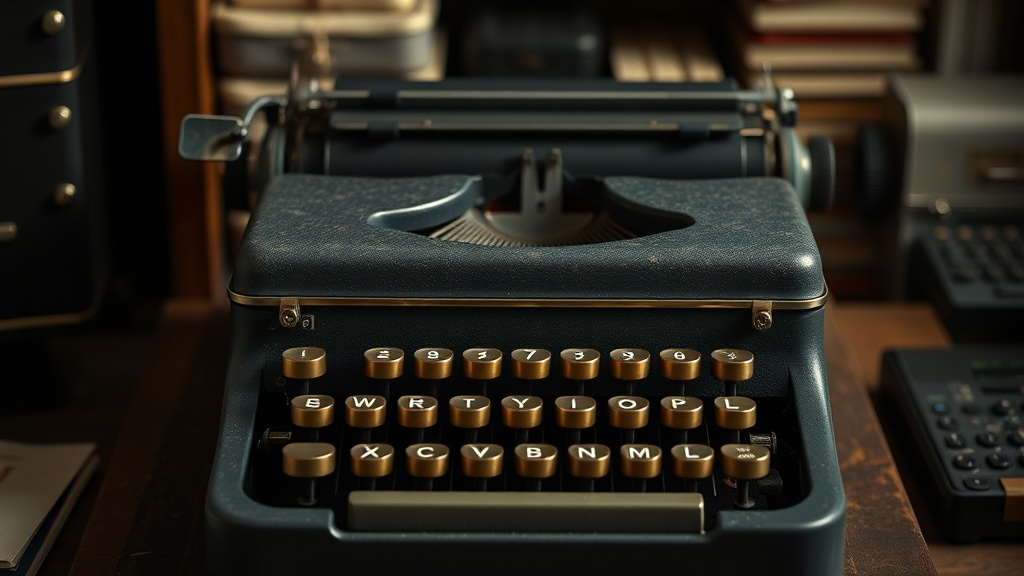
Preserving Your Typewriter: A Comprehensive Guide to Secure Long-Term Storage

Why Does Proper Typewriter Storage Even Matter?
Imagine this: you've just inherited a beautiful 1930s Royal Standard, or perhaps you're downsizing your collection, or maybe life simply demands a temporary hiatus from your writing endeavors. Whatever the reason, the moment comes when you need to put your cherished typewriter away for an extended period. The question, however, isn't just about finding a spot on a shelf. It's about how to ensure that when you retrieve it, it's in the same pristine—or at least, undamaged—condition as when you tucked it away. Improper storage can lead to a host of heartbreaking issues: rust creeping across delicate mechanisms, rubber platens and rollers cracking or flattening, dust and grime seizing up typebars, or even pests deciding your machine makes a cozy, if unfortunate, home. Understanding these threats is the first step toward safeguarding your mechanical companion, preserving both its functionality and its historical value for future use or generations. A little preventative care now can save you countless hours—and dollars—in restoration work later.
What Preparations Are Needed Before Storing a Typewriter?
Before any typewriter embarks on a long-term slumber, it needs a thorough spa treatment. Think of it as preparing a classic car for winter storage; you wouldn’t just park it and walk away, would you?
First, a Deep Clean
Dust is the enemy, plain and simple. It combines with residual lubricants to form a gummy sludge that can impede movement and attract moisture. Start with a soft brush and a can of compressed air (used carefully, from a distance, to avoid dislodging small parts or forcing grime deeper). Gently blow out the nooks and crannies, paying special attention to the segment where the typebars pivot, the carriage rails, and under the ribbon cover. Follow up with a microfiber cloth dampened with a mild, all-purpose cleaner for the exterior—avoiding any decals or painted areas that might be sensitive. For the individual type slugs, a specialized typewriter cleaner or even a stiff brush with a touch of rubbing alcohol can remove dried ink, ensuring they're clean and free-moving. Never use abrasive materials or harsh chemical solvents, as these can strip paint, dissolve plastics, or corrode metal.
To Lubricate, or Not to Lubricate?
This is where things get nuanced. Many vintage typewriters are over-lubricated by well-meaning but misinformed owners. The general consensus among experienced collectors and conservators is: less is more. For long-term storage, minimal lubrication is often the best approach. If you must, use a tiny drop of high-quality, synthetic clock oil or sewing machine oil on only the most critical, fast-moving pivot points—and absolutely nowhere else. Avoid WD-40 or similar multi-purpose sprays; these can gum up and attract dust over time, doing more harm than good. Lubricants should never touch rubber components, painted surfaces, or areas prone to attracting dust. The goal isn't to make it glide like new, but to prevent friction points from seizing over decades.
Securing Moving Parts
Just like a ship battening down its hatches for a storm, your typewriter needs its moving parts secured. If your machine has a carriage lock, engage it. If not, you can gently tape the carriage return lever down with painter’s tape (which won’t leave residue) to prevent it from flopping around. Ensure the typebars are all in their resting positions, not jammed against each other or the platen. For machines with rubber platens and feed rollers, engage the paper release lever to lift the feed rollers slightly off the platen. This helps prevent flat spots from forming where they press together during static storage. If you’re storing it for many, many years, some experts even recommend removing the platen entirely, though this is a more advanced procedure.
Ribbon Management
This step is non-negotiable for long-term storage: remove the ribbon. Old ink can become acidic or oily, potentially corroding metal spools, staining the ribbon vibrator, or even drying onto the type slugs themselves, making cleaning a nightmare later. Store the ribbon separately in a sealed, opaque, airtight bag to prevent it from drying out, or simply discard it if it’s already old and you plan to replace it upon retrieval. For truly archival storage, some conservators recommend storing the ribbon spools separately from the ribbon material itself, but for most collectors, a well-sealed bag is sufficient.
Where Is the Best Place to Keep a Stored Typewriter?
Location, location, location. Just as real estate agents will tell you this is everything for a home, it’s also paramount for your typewriter’s long-term well-being.
Environmental Control is Key
The biggest enemy to any mechanical artifact is environmental instability. You’ll want a storage area that maintains a stable temperature, ideally between 18-22°C (64-72°F), according to museum conservation guidelines from