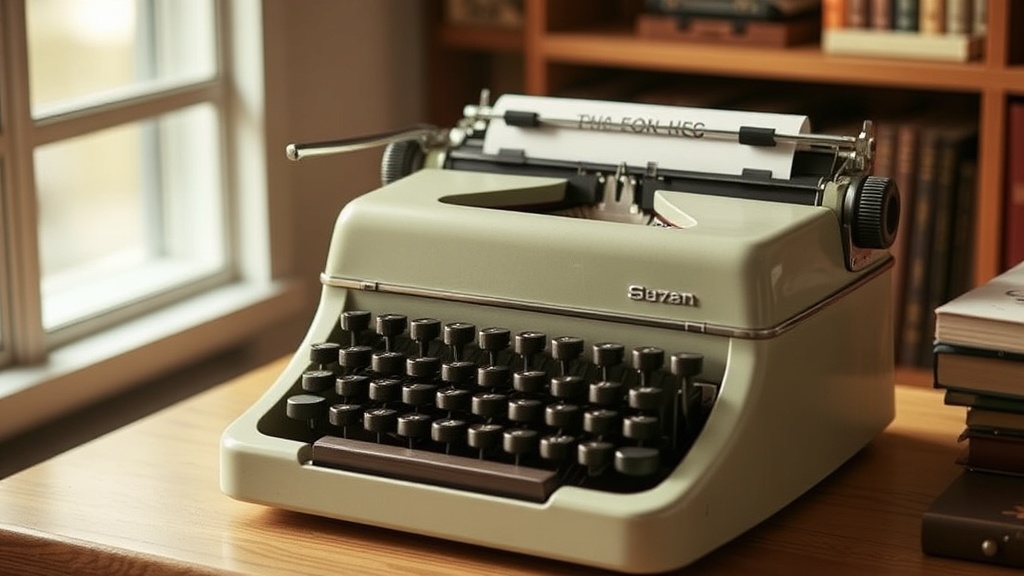
The Complete Guide to Buying Your First Vintage Typewriter

Buying a vintage typewriter doesn't have to feel like a gamble. This guide walks through exactly what to look for, where to shop, how much to spend, and the common pitfalls that catch first-time buyers off guard. Whether the goal is a display piece for the bookshelf or a daily writing companion, these practical steps will help find a machine worth keeping.
What's the Best Vintage Typewriter for Beginners?
The best starter machine is one that works reliably and has available parts. For absolute beginners, portable models from the 1950s and 1960s offer the sweet spot of affordability, durability, and repairability.
The Olympia SM3 and SM4 consistently rank as top recommendations. These West German portables feature smooth, responsive actions and build quality that rivals machines costing twice as much. The carriage return lever glides. The keys don't stick. Parts interchange between models, which matters when something breaks.
The Smith-Corona Silent-Super (and its cousins in the Sterling and Silent lines) represents another solid choice. Made in upstate New York, these machines flooded the market in the 1950s. They're common enough to find cheaply, well-built enough to last, and simple enough that most repairs don't require a specialist.
That said, don't overlook lesser-known brands. The Torpedo 18b—another West German portable—offers exceptional typing feel at lower prices simply because the name lacks cachet. The Underwood 319, built in Japan by Nakajima, provides a budget-friendly entry point with surprisingly decent mechanics.
Here's a quick comparison of solid beginner options:
| Model | Era | Weight | Price Range (USD) | Best For |
|---|---|---|---|---|
| Olympia SM3/SM4 | 1950s-60s | ~22 lbs | $150-$400 | Daily writing, reliability |
| Smith-Corona Silent-Super | 1950s | ~19 lbs | $75-$250 | Budget buyers, beginners |
| Hermes 3000 | 1960s-70s | ~18 lbs | $300-$800 | Collectors, smooth action |
| Brother Deluxe 220 | 1970s | ~12 lbs | $50-$150 | Portability, light use |
| Royal Quiet De Luxe | 1940s-50s | ~23 lbs | $100-$300 | Classic styling, solid build |
Worth noting: pre-1940s machines look gorgeous but often lack features—like tabulators and margin releases—that modern typists expect. Start with post-war models unless the aesthetic truly matters more than function.
Where Should You Actually Buy a Vintage Typewriter?
The answer depends on budget, risk tolerance, and how much work you're willing to do. Each marketplace carries trade-offs.
eBay remains the largest marketplace. Selection is unmatched—thousands of machines list daily. The catch? Shipping damage rates hover around 15-20% for improperly packed typewriters. Look for sellers who specifically mention double-boxing, removing the carriage, or using foam padding. Ask questions before bidding. A seller who responds with detailed photos and typing samples usually cares enough to pack properly.
Etsy tends toward higher prices but often includes sellers who clean and service machines before listing. For a first purchase, paying the premium (sometimes $50-$100 more) buys peace of mind. Read reviews carefully—focus on comments about functionality, not just appearance.
Local sources eliminate shipping risks entirely. Facebook Marketplace and Craigslist surface estate sale finds and attic discoveries weekly. The best deals appear in smaller cities and rural areas where competition thins. Edmonton, for example, sees regular typewriter listings at estate sales—often from families clearing out grandparents' homes.
Thrift stores and antique malls offer the thrill of the hunt. Success rates are low (maybe one working machine per hundred visits), but prices stay reasonable. Always bring paper for a typing test—most sellers will allow this if asked politely.
Specialized dealers like MyTypewriter.com and Gramercy Typewriter Company provide fully serviced machines with warranties. Expect to pay $300-$800, but these machines arrive ready to type. For buyers who value time over money, this route eliminates guesswork.
How Much Should a First Vintage Typewriter Cost?
A functional, decent-quality vintage portable should run between $75 and $300 in today's market. Anything under $50 likely needs significant work—or doesn't work at all. Anything over $500 enters collector territory where rarity and condition drive prices more than typing utility.
Here's the thing: the purchase price is only part of the equation. Budget an additional $50-$150 for professional cleaning and adjustment if buying an unrestored machine. Sticky keys, misaligned type slugs, and dried-out ribbons transform a bargain into a paperweight.
Factor in ongoing costs too. Ribbons run $10-$15 each and last roughly six months with regular use. Paper is standard and cheap, though some enthusiasts prefer cotton content paper for a crisper impression. Cleaning supplies—mineral spirits, brushes, lint-free cloths—add another $30 upfront.
Don't overpay for "rare" claims. True rarities—early Sholes & Glidden machines, prototype models, machines with documented celebrity ownership—belong in museums or serious collections. Most portables labeled "rare" on eBay simply aren't. The market produced millions of these machines. Scarcity is largely myth.
Red Flags to Watch For
Some problems are fixable. Others aren't—or cost more than the machine's worth.
- Frozen mechanisms: If the carriage won't move or keys don't strike, assume internal rust or severe corrosion. Sometimes fixable, often not worth the effort.
- Missing type slugs: Look at the type basket—the semicircle of metal arms under the ribbon. Each should end in a raised letter or symbol. Missing slugs mean incomplete typing sets.
- Bent or broken drawbands: The drawband pulls the carriage back after typing. If it's broken, the carriage won't return properly. Replacement is possible but finicky.
- Cracked or yellowed platens: The rubber roller behind the paper hardens with age. A rock-hard platen creates uneven impressions and can tear paper. Recovery services exist but cost $150-$250.
- Repainted shells: Original paint indicates honest wear. Fresh paint often hides rust, dents, or amateur repairs. Inspect carefully.
Testing Before You Buy
Always type a sample. Bring paper—preferably two sheets with carbon paper between them to test impression strength. Here's what to check:
- Key action: Each key should move smoothly without sticking. The return spring should feel consistent across all keys.
- Alignment: Type a line of lowercase 'e' characters. They should sit on the same baseline with consistent spacing.
- Shift function: Both shift keys should raise the carriage smoothly and hold position without slipping.
- Margin bells: The bell should ring within 8-10 characters of the right margin.
- Line spacing: Advance the paper and verify consistent movement. Jerky advancement indicates feed roller issues.
Trust your fingers. A machine that feels wrong—sticky, gritty, or imprecise—probably needs work. Don't let aesthetics override mechanics.
Restoration vs. Original Condition
The vintage typewriter community splits on this question. Purists prefer original condition—even with patina, scratches, and faded paint. They argue that history lives in the wear marks. Users often prefer restored machines that function like new.
For a first purchase, original condition with good mechanics beats beautiful appearance with hidden problems. A worn paint job doesn't affect typing. A bent typebar does. Focus on function first.
If the machine arrives filthy (most do), basic cleaning is safe. Wipe the shell with a damp microfiber cloth. Clean type slugs with a brass brush and denatured alcohol. Vacuum dust from the type basket using a soft brush attachment. Avoid water near internal mechanisms—and never submerge anything.
Deep restoration—replatening, rechrome, repainting—belongs to specialists. Attempting these without experience destroys value and often breaks things permanently.
What About Electric and Electronic Models?
Electric typewriters—like the IBM Selectric or later Brother models—offer conveniences like powered carriage returns and lighter touch. They also introduce complexity. The Selectric's "golf ball" print element rotates and tilts with mechanical precision that requires specialized knowledge to repair.
For a first machine, manual portables remain the smarter choice. No power cords. No circuit boards. No proprietary parts that vanished in the 1980s. Just metal, springs, and levers that have worked for seventy years and will work for seventy more with basic care.
That said, late-model electronic typewriters (1980s-90s) with LCD displays and memory functions appeal to some writers. The Brother SX-4000 and Smith-Corona H Series represent reliable options if word processing features matter. Treat these as disposable, though—when they break, parts simply don't exist.
Start simple. Master a manual machine first. The skills transfer if you later upgrade to something powered.
"The best typewriter is the one that makes you want to write. Everything else—brand, color, market value—is secondary to that one metric."
Buying vintage isn't about perfection. It's about connection—to a physical object, to history, to the rhythm of mechanical creation. Find a machine that feels right in your hands. Clean it. Learn its quirks. Type badly at first, then better. The machine will outlast the learning curve. That's the whole point of buying something built to last forever.