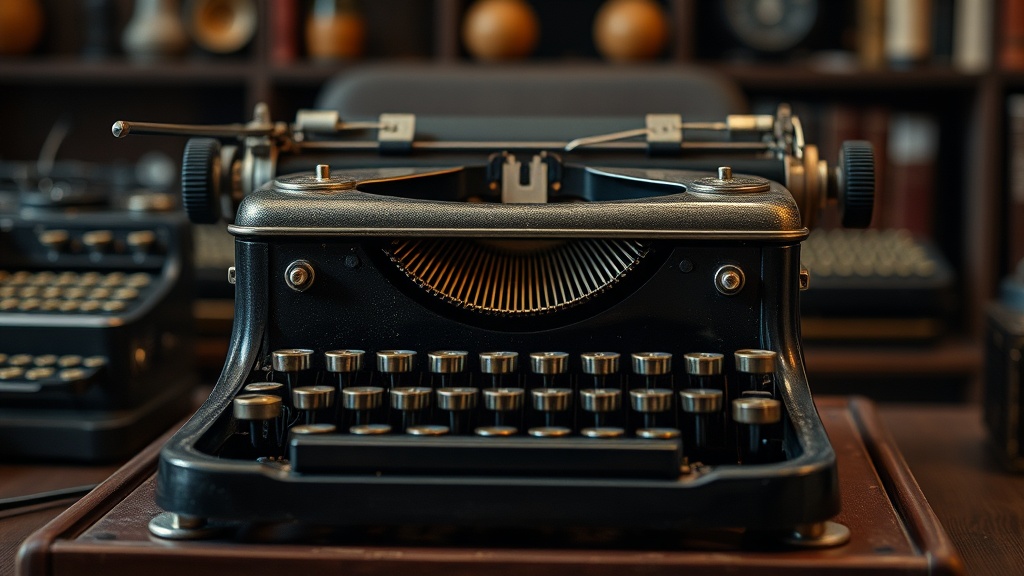
The Golden Age of Mechanical Typewriters: A Collector's path

This post covers the most collectible mechanical typewriters from roughly 1900 to 1960, explains what separates a display piece from a working writer's machine, and offers practical guidance for anyone looking to start or refine a collection. The market for vintage typewriters has grown steadily over the past decade, and understanding which models hold value — and which ones are best left on the thrift store shelf — can save both money and disappointment. Whether you're hunting through estate sales in Edmonton or browsing online auctions from a basement apartment in Calgary, knowing the difference between a Royal Quiet De Luxe and a rusted no-name portable makes all the difference.
What makes a mechanical typewriter worth collecting?
A mechanical typewriter becomes worth collecting when it combines historical significance, build quality, condition, and brand reputation in a way that collectors consistently seek out. The golden age — roughly spanning from the early 1900s through the 1950s — produced machines that were over-engineered by modern standards, with cast-iron frames, glass-topped keys, and precision metal type bars that outlasted their original owners.
Here's the thing: not every old typewriter is a treasure. A 1940s budget model from an obscure manufacturer might look charming on a shelf, but it won't command the same prices as a Royal Quiet De Luxe or an Olympia SM3. Condition matters enormously. A machine with a frozen carriage, missing type slugs, or a cracked platen will need restoration work that often costs more than the finished piece is worth. (Always test the carriage release and space bar before committing to a purchase — sticky action is a warning sign.)
Worth noting: original paint and decals add significant value. A re-painted typewriter — no matter how skillfully done — typically loses half its collector appeal. The patina of age, when paired with proper mechanical function, tells a story that refinishing erases. Collectors call this "honest wear," and it's prized over perfection.
Which brands dominated the golden age of typewriters?
Royal, Underwood, Remington, Olympia, Hermes, and Smith-Corona produced the majority of machines that serious collectors chase today. Each company developed distinct reputations — Royal became synonymous with reliability, Underwood with the classic office standard, and European makers like Olympia and Hermes with precision engineering that rivaled Swiss watches. These names dominate collector forums, estate sale listings, and the display cases of dedicated enthusiasts from Vancouver Island to the prairies.
The catch? Rarity and branding don't always align. A common Underwood No. 5 — while historically important as one of the best-selling typewriters ever made — is so abundant that prices remain modest. You can often find one for under $150 at estate sales across Edmonton and the surrounding Alberta countryside. That doesn't make it a bad machine; it simply means the market won't pay a premium for one unless the condition is truly exceptional.
That said, certain models within these brands command genuine premiums. The Royal Quiet De Luxe from the 1950s remains a favorite for both writers and collectors, with its distinctive tweed case and smooth, quiet action. The Olympia SM3 and SM4 series deliver what many consider the finest typing action of any portable. Hermes 3000 machines — particularly those in rare colors like mint green or salmon pink — regularly sell for $400 to $800 in good condition. Olivetti's Lettera 22, designed by Marcello Nizzoli, won the Compasso d'Oro design award and became a design icon featured in the Museum of Modern Art's permanent collection.
| Brand / Model | Era | Key Traits | Typical Market Value (CAD) |
|---|---|---|---|
| Royal Quiet De Luxe | 1940s–1950s | Reliable, quiet action; iconic tweed case | $200 – $450 |
| Underwood No. 5 | 1900s–1930s | Historic office standard; very common | $75 – $200 |
| Olympia SM3 / SM4 | 1950s–1960s | Precise engineering; excellent typing feel | $250 – $550 |
| Hermes 3000 | 1950s–1960s | Swiss build quality; rare colors command premiums | $400 – $800 |
| Olivetti Lettera 22 | 1950s–1960s | Compact design; lightweight; award-winning aesthetics | $180 – $400 |
How do you spot a valuable vintage typewriter at auction?
You spot a valuable vintage typewriter by checking the model name, testing the mechanical action, inspecting the case and accessories, and researching serial numbers before bidding. The first thirty seconds of handling a machine at an estate sale or auction often reveal everything you need to know. Experienced collectors develop an instinct for the weight, sound, and feel of a quality machine — but beginners can learn quickly by focusing on a few specific details.
Start with the carriage. It should slide smoothly from margin to margin. If it sticks, the cause might be simple — dried oil or dust — but it could also indicate bent rails or a broken escapement. Press a few keys. The type bars should rise swiftly and strike the platen with a clean, unified sound. (A clattering, loose action suggests worn linkages or missing springs.)
Check the case. An original leatherette or tweed case with working latches adds $50 to $100 to the value of a portable typewriter. Missing case keys are common and not a dealbreaker, but a completely destroyed case often means the machine itself was stored poorly. Look for the serial number — usually on the frame beneath the carriage or on the back panel. Cross-reference it with databases like the Typewriter Database to pinpoint the year of manufacture and verify that the model badge matches the actual mechanics.
Worth noting: local auction houses in Edmonton and Calgary occasionally list typewriter collections from estate liquidations. These sales can be excellent sources for undervalued machines, provided you arrive early and know what to look for. The Antique Trader market guides offer useful price benchmarks for North American auctions, and checking completed listings on eBay before bidding helps establish realistic ceilings.
Should you restore a vintage typewriter or preserve it as-found?
You should preserve a vintage typewriter as-found whenever the original finish and decals remain intact, and reserve full restoration for machines that are mechanically unsound or already stripped of their original surfaces. Over-restoration is one of the most common mistakes new collectors make. The impulse to make an old machine look factory-new often destroys the very character that makes it collectible.
A light cleaning — removing dust from the type slugs with a brass brush, lubricating the carriage rails with a light machine oil, and replacing the ribbon — counts as maintenance, not restoration. These steps keep a machine functional without compromising its historical integrity. (Always avoid WD-40; it leaves a gummy residue that attracts dirt and eventually seizes mechanisms. Mineral spirits and sewing machine oil are better choices for most cleaning tasks.)
Here's the thing: professional typewriter restoration is a specialized craft. Re-chroming platens, re-plating type slugs, and re-springing carriages requires tools and expertise that most hobbyists don't possess. A full mechanical overhaul from a qualified technician can cost $300 to $500. For a common machine, that math rarely makes sense. For a rare pre-Selectric IBM executive model or a custom-painted Royal, it might.
The Edmonton collector community tends to favor conservation over restoration. Sage Lindgren and others in the local scene often advise newcomers to appreciate the honest wear on a seventy-year-old machine. A small paint chip or a faded decal isn't damage — it's documentation of the machine's working life.
What are the best mechanical typewriters for new collectors?
The best mechanical typewriters for new collectors balance availability, affordability, and typing quality without requiring specialized knowledge to maintain. Starting with a reliable, well-documented machine makes the learning curve far more enjoyable and reduces the risk of buying a beautiful doorstop that will never produce a clean page again.
The Royal Quiet De Luxe tops most beginner lists. It's plentiful, handsome, and types beautifully. Smith-Corona Silent and Sterling models from the 1950s offer similar virtues at slightly lower prices, with solid metal construction and readily available ribbons. For those drawn to European design, the Olivetti Lettera 22 provides a compact, lightweight option with undeniable style — though its plastic body is more fragile than metal contemporaries and requires gentler handling.
That said, there's nothing wrong with beginning a collection with an Underwood No. 5 or a Remington Noiseless. These machines represent American manufacturing at its peak, and their sheer abundance means you can afford to make a few mistakes while learning. The community of collectors — both online and at meets in Edmonton — tends to be generous with advice for newcomers. (Don't be shy about asking questions at the Typewriter Database forums; the members there have seen every variant and pitfall imaginable.)
The golden age of mechanical typewriters isn't a static museum exhibit. It's a living interest, populated by writers who still draft novels on cast-iron portables and collectors who track down missing ribbon spools with the intensity of antique hunters. Every machine that survives with its original paint and functioning mechanisms represents a small victory against disposable culture.
Whether the goal is a working writer's tool or a shelf-worthy display piece, the hunt itself becomes part of the reward. Estate sales, online auctions, dusty basement discoveries — each offers the possibility of a Royal in a tweed case or an Olympia SM3 with perfect decals. The typewriter doesn't need to be rare to be meaningful. It needs to be genuine. And in a world of instant deletion, that permanence still matters.