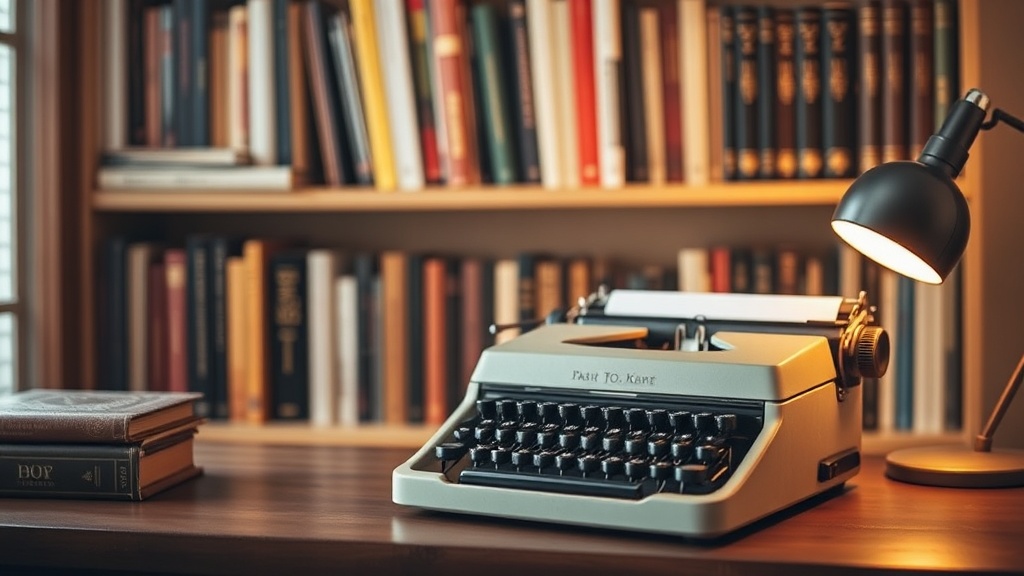
Why Your Typewriter Collection Deserves Better Than a Bookshelf

Display & Care
There's a persistent myth among collectors that typewriters belong on bookshelves—lined up like dusty encyclopedias, spines out, barely noticed. This approach doesn't just undersell your collection; it actively damages the machines. Typewriters are three-dimensional sculptures with mechanisms that need airflow, keys that settle under pressure, and paint that fades in direct sun. Sticking them on a standard shelf is like storing vintage guitars in a damp basement—technically indoors, but hardly proper care. This guide covers how to display your collection in ways that protect the machines while turning them into genuine conversation pieces.
What's the Best Height for Displaying Heavy Typewriter Models?
Weight distribution matters more than most collectors realize. A 1950s IBM Executive can tip the scales at nearly 40 pounds—and that's before you factor in the psychological weight of accidentally knocking it onto your foot. The ideal display height keeps the heaviest machines between waist and shoulder level. Go lower and you're inviting back strain; go higher and gravity becomes your enemy.
For standard portable typewriters (the 15-25 pound range), eye-level shelving works beautifully—but only if the shelf itself is rated for the load. Most IKEA-style floating shelves list weight capacities around 20-25 pounds. That sounds adequate until you remember typewriters are dense metal objects that concentrate their mass in small footprints. A single Hermes 3000 won't strain a bracket, but three of them will test the integrity of drywall anchors you installed in a hurry.
Consider console tables for your heaviest machines—the Depression-era steel tanks, the early electrics, anything with "Standard" in the name. These pieces sit lower, often have wider footprints, and were literally built to support substantial weight. Estate sales in older neighborhoods frequently yield solid wood tables that cost less than a single vintage typewriter and will outlast your collection.
Do Typewriters Need Climate Control When Displayed?
Short answer: not strictly—but your display environment shouldn't be an afterthought. Typewriters tolerate normal household conditions better than stringed instruments or oil paintings, but they have limits. The felt dampeners inside mechanisms absorb moisture. Rubber platens harden and crack in dry heat. Paint crazes when temperature swings happen rapidly.
The sweet spot is boring: stable room temperature between 65-75°F with relative humidity around 45-55%. Basements are problematic (damp invites corrosion), attics are worse (heat cycling destroys rubber), and direct sunlight through windows will fade paint and yellow keys faster than you'd expect. If you're displaying near a window, UV-filtering film costs roughly $30 and pays for itself the first time it prevents a cherry-red Smith-Corona from turning salmon pink.
Don't overthink humidity unless you live in genuinely extreme climates. A $20 digital hygrometer placed near your display tells you everything you need to know. If readings consistently spike above 60%, add a small dehumidifier. If you're below 30% for months on end, a humidifier helps—but honestly, your own comfort probably matters more than the machines' at that point.
How Can I Light My Typewriter Collection Without Damaging It?
Lighting transforms a shelf of machines into a museum-quality display—but the wrong light source accelerates deterioration. Incandescent bulbs generate heat that dries rubber and warps plastic keytops. Direct sunlight is obviously destructive. Even standard LED bulbs emit enough UV to matter over years of exposure.
The practical solution is museum-grade LED track lighting or picture lights with UV filters. These run cool, direct light precisely where you want it, and come in color temperatures that flatter different machine eras. Warmer lights (2700K-3000K) complement the cream and gray tones of 1940s-50s machines. Cooler lights (4000K+) make chrome and colorful 1960s-70s models pop.
Position lights to graze across the machines rather than blasting directly down—this creates subtle shadows that emphasize the sculptural quality of typewriter bodies. A $40 set of puck lights from a home improvement store, properly aimed, outperforms expensive display cases with harsh overhead lighting. The goal is to reveal the machine's form, not interrogate it.
Arranging by Era, Brand, or Aesthetic?
There's no wrong way to organize a display, but certain approaches tell better stories. Chronological arrangement—oldest to newest—naturally illustrates the evolution of design language: the ornate Victorian curves of early Underwoods giving way to the simplified industrial forms of the 1930s, then the optimistic chrome-and-color palettes of post-war manufacturing.
Grouping by brand creates visual coherence because manufacturers maintained consistent design languages. A shelf of Olympias—regardless of era—shares DNA. Same with a row of Hermes machines: Swiss precision and restrained elegance whether you're looking at a 1950s 3000 or a 1970s Baby. This approach works especially well when you have multiples from favorite makers.
Color-based arrangement is increasingly popular, and not just for Instagram aesthetics. Typewriters from the 1950s-60s came in genuine designer colors—turquoise, coral, mint, mustard—that coordinate beautifully with mid-century modern interiors. A wall of pastel machines makes a bolder statement than any painting. Just ensure you're not sacrificing mechanical significance for visual pop: that rosy pink Smith-Corona Skyriter deserves respect as a feat of miniaturization, not just as a color accent.
The Case for Rotation
Serious collectors face a reality: you own more machines than you can reasonably display. Rather than cramming shelves until they resemble thrift store inventory, consider rotation as a feature, not a limitation. Seasonal displays keep your space feeling fresh. A crisp green Hermes Rocket feels right for spring; a burgundy Royal Quiet De Luxe suits winter months perfectly.
Rotation also gives you built-in maintenance opportunities. Every three months, when you swap machines, spend fifteen minutes with each outgoing piece: check the ribbon, exercise the keys, wipe down the body. Typewriters that sit static develop issues—springs lose tension, oil migrates, dust settles into mechanisms. Regular handling prevents the sad discovery of a seized machine you meant to get to eventually.
Store rotated machines properly—not in cardboard boxes in the garage. Original cases are ideal; failing that, archival storage boxes with acid-free tissue work well. The goal is protection from dust and light without sealing in moisture. A typewriter in proper storage can wait years without complaint. One stuffed in a damp basement will surprise you with rust and mold when you finally retrieve it.
Creating Context With Accessories
The best displays tell stories beyond the machines themselves. Original sales literature, vintage typing manuals, period-correct desk accessories—these transform a collection from "old things on shelves" into a genuine historical presentation. An early 20th-century machine paired with its original instruction manual and a period desk lamp creates a vignette that transports viewers.
Be selective, though. A few well-chosen accessories improve; clutter distracts. One framed vintage advertisement behind a featured machine draws the eye and provides context. A shelf crowded with unrelated knick-knacks looks like a garage sale. Let the typewriters breathe. They're inherently interesting objects—they don't need competition.
Consider functional integration where possible. A displayed machine that's also your daily writer bridges the gap between collecting and using. Set up a small writing station with your favorite portable, good paper, and a comfortable chair. The machine stays accessible, gets regular exercise, and reminds you daily why you started collecting in the first place. Typewriters were built to work, not to pose.
"A typewriter on display should invite interaction—even if that interaction is just looking closely. The worst displays are the ones that feel like furniture stores: perfectly arranged and completely sterile." — Paul Robert, The Classic Typewriter Page
When to Use Cases and When to Skip Them
Glass display cases offer protection and a certain museum gravitas, but they're not universally appropriate. Dust covers work fine for everyday storage. Cases make sense for truly rare pieces, machines with delicate paint or decals, or when you're displaying in high-traffic areas where accidents happen. They're less necessary for common workhorses that can handle occasional bumps.
If you do invest in cases, ensure they have ventilation. Sealed cases trap humidity and create microclimates where corrosion thrives. Small silica gel packets help, but they need regular replacement or recharging. And please—don't use cases as an excuse to neglect your machines. A typewriter behind glass still needs periodic attention, exercise, and care.
For more detailed information on typewriter preservation, the Antique Typewriter Society and Federation maintains excellent resources on conservation best practices. The Classic Typewriter Page by Paul Robert remains the definitive online reference for collectors seeking deeper technical knowledge.